


Alexandria, Egypt, holds significant historical and, cultural importance. Founded by Alexander the Great in 331 BC, Alexandria became a major center of Hellenistic civilization and one of the most prominent cities in the ancient world. It served as the capital of Egypt for nearly a millennium under various rulers, including the Ptolemaic dynasty and the Roman Empire.
Alexandria was renowned for its library, the Great Library of Alexandria, which was one of the largest and most significant libraries of the ancient world. It housed countless scrolls and manuscripts, making it a center for scholarship, learning, and intellectual exchange. Due to its strategic location on the Mediterranean coast, Alexandria was a melting pot of different cultures and religions, including Greek, Egyptian, Roman, Jewish, and later, Christian and Islamic influences. This multicultural environment contributed to its vibrant intellectual and artistic life. Alexandria was home to renowned scholars, scientists, and mathematicians such as Euclid, Archimedes, and Ptolemy, whose contributions significantly influenced the development of mathematics, astronomy, and other scientific fields.
Today, Alexandria remains an important city in Egypt, serving as a hub for commerce, industry, and tourism. Its rich history and cultural heritage continue to attract visitors from around the world, contributing to its economy and cultural vibrancy.
Alexandria is definitely worth visiting for tourists. Alexandria boasts a wealth of historical sites and landmarks, including the Citadel of Qaitbay, the Catacombs of Kom El Shoqafa, and the Roman Amphitheatre. These sites offer insights into the city's rich past and are must-see attractions for history enthusiasts.
As a city with a long history of multiculturalism, Alexandria offers a unique blend of cultures, traditions, and cuisines. Exploring its diverse neighborhoods, markets, and eateries provides visitors with a taste of this cultural richness. Situated on the Mediterranean coast, Alexandria offers stunning sea views and picturesque beaches. Visitors can enjoy leisurely walks along the Corniche or relax on one of the city's many beaches, such as Stanley Beach or Montazah Beach.
In addition to its historical and cultural attractions, Alexandria offers modern amenities such as hotels, restaurants, and shopping centers. Visitors can enjoy a comfortable stay while experiencing the city's charms.
Overall, Alexandria offers a compelling mix of history, culture, and natural beauty that appeals to a wide range of travelers.
Citadel of Qaitbay
The Citadel of Qaitbay, also known as the Qaitbay Fortress or the Fort of Qaitbay, is a historic fortress located on the Mediterranean coast in Alexandria, Egypt. It was constructed in the 15th century during the reign of Sultan Qaitbay, who ruled Egypt from 1468 to 1496. The purpose of the citadel was to defend the city from potential invasions by sea, particularly from the threat of the Ottoman Empire.
The Citadel of Qaitbay is renowned for its strategic location and impressive military architecture, blending elements of Islamic and European styles. It stands on the site of the famous Pharos Lighthouse, one of the Seven Wonders of the Ancient World, which was partially destroyed by earthquakes over the centuries. Some of the stones from the ancient lighthouse were reused in the construction of the fortress.
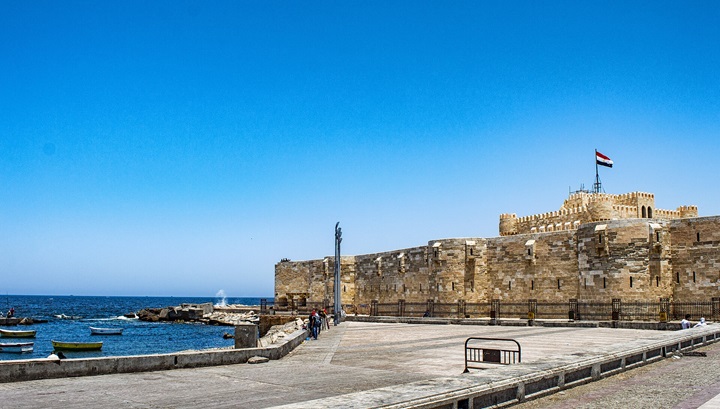
Over the years, the Citadel of Qaitbay has undergone restoration and preservation efforts to maintain its historical significance. Today, it is a popular tourist attraction in Alexandria, offering visitors a glimpse into Egypt's rich maritime history and providing panoramic views of the Mediterranean Sea and the cityscape.
The Citadel of Qaitbay exhibits several distinctive architectural features. The fortress is surrounded by thick stone walls fortified with bastions, strategically designed to defend against sea attacks. The construction of the fortress incorporates elements from both Islamic and European architectural styles. This blend is a result of Sultan Qaitbay's invitation of craftsmen from various cultural backgrounds to contribute to the construction.
Within the fortress, there are various structures including a mosque, barracks, warehouses, and other military buildings. Additionally, there are palatial complexes intended for the sultan and his court.
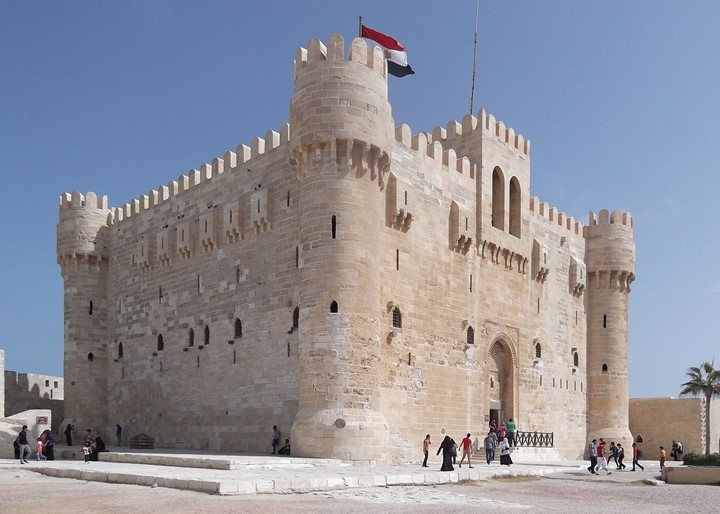
As the fortress was built on the site of the ancient Pharos Lighthouse, some of the original stones and elements from the lighthouse were reused in its construction. This includes the incorporation of stones salvaged from the remnants of the Pharos Lighthouse into the fortress walls and other parts of the structure.
The inner courtyard of the fortress is adorned with arcades and columns, creating an aesthetically pleasing atmosphere. Additionally, various architectural details such as carved patterns and frescoes can be observed within the fortress.
Catacombs of Kom El Shoqafa
The Catacombs of Kom El Shoqafa, also known as the "Mound of Shards". The catacombs date back to the 2nd century AD, during the Roman period in Egypt. The catacombs were used as a burial site for wealthy Alexandrian citizens, incorporating elements of both Egyptian and Greco-Roman burial customs and art.
The catacombs exhibit a unique blend of Egyptian, Greek, and Roman architectural styles. The design features include a central shaft leading to multiple levels of burial chambers and galleries, with intricate decorations and motifs.
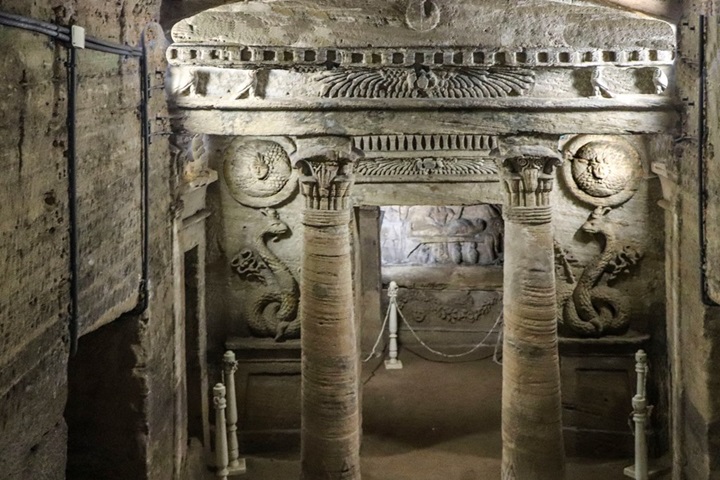
The entrance to the catacombs is marked by a spiral staircase leading down to the burial chambers. The entrance hall itself is adorned with intricate reliefs and carvings depicting various mythological and religious scenes. The catacombs consist of multiple levels of burial chambers, interconnected by passageways and corridors. These chambers contain sarcophagi, niches, and loculi (shelf-like tombs) where the deceased were interred. The walls and ceilings of the catacombs are adorned with beautiful frescoes, depicting scenes from daily life, mythology, and religious beliefs of the time. These artworks showcase the syncretism of cultures present in Alexandria during the Roman era.
The Catacombs of Kom El Shoqafa reflect the religious and cultural diversity of ancient Alexandria, with influences from Egyptian, Greek, and Roman beliefs evident in the architectural design and decoration.
Overall, the Catacombs of Kom El Shoqafa are a testament to the rich history and cultural heritage of Alexandria, providing valuable insights into ancient burial practices and artistic expression during the Roman period in Egypt.
The Embankment of Alexandria
The Embankment of Alexandria, also known as the Alexandria Corniche, is a prominent waterfront promenade situated along the coastline of Alexandria, Egypt. It stretches for several kilometers along the Mediterranean Sea, offering scenic views, recreational areas, and access to various landmarks and attractions in the city.
The Corniche provides breathtaking views of the Mediterranean Sea, with opportunities for leisurely strolls, jogging, or simply enjoying the sea breeze. It is a popular spot for locals and tourists alike to relax and unwind while admiring the beautiful coastal scenery.
Along the Corniche, visitors can find several notable landmarks and attractions, including the Qaitbay Citadel, the Bibliotheca Alexandrina (Library of Alexandria), the Alexandria National Museum, and various parks and gardens.
The Corniche is lined with numerous cafes, restaurants, and eateries offering a wide range of cuisines, from traditional Egyptian dishes to international fare. Visitors can enjoy delicious meals or refreshing beverages while taking in the views of the sea.
The Embankment of Alexandria provides opportunities for various recreational activities, such as cycling, rollerblading, or simply enjoying a picnic in one of the waterfront parks. There are also facilities for water sports, including swimming and boating.
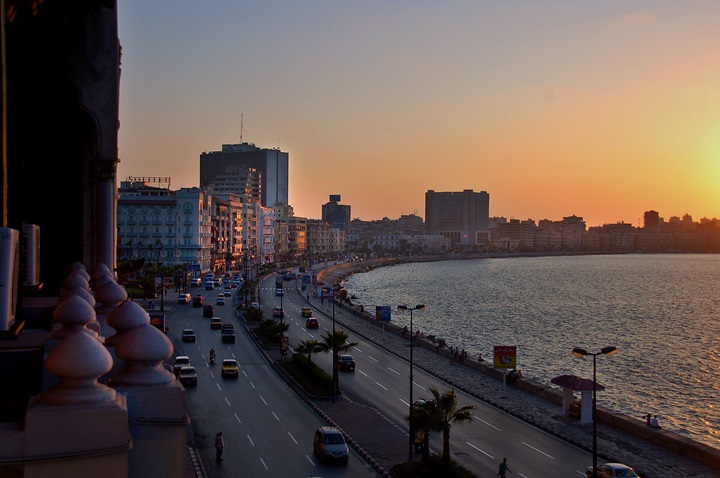
Throughout the year, the Corniche hosts various cultural events, festivals, and celebrations, showcasing the rich heritage and vibrant cultural life of Alexandria. These events often include music performances, art exhibitions, and traditional festivities.
Overall, the Embankment of Alexandria is not only a scenic waterfront promenade but also a cultural and recreational hub that embodies the spirit and charm of this historic city on the Mediterranean coast.
Stanley Bridge
The Stanley Bridge, also known as the Stanley Bridge of Alexandria, is a notable landmark located in Alexandria, Egypt. The Stanley Bridge spans across the Eastern Harbor of Alexandria, connecting the city's eastern districts with the Ras El-Tin quarter.
The bridge was constructed in the early 21st century, opening to the public in 2014. It was built to alleviate traffic congestion in Alexandria and improve connectivity between different parts of the city.
The Stanley Bridge is a modern cable-stayed bridge, characterized by its tall pylons supporting the bridge deck with cables. It features a sleek and contemporary design, adding to the city's skyline. The bridge has a total length of approximately 400 meters (1,312 feet). The Stanley Bridge includes pedestrian walkways and dedicated lanes for cyclists, providing a safe and convenient crossing for both pedestrians and non-motorized traffic.
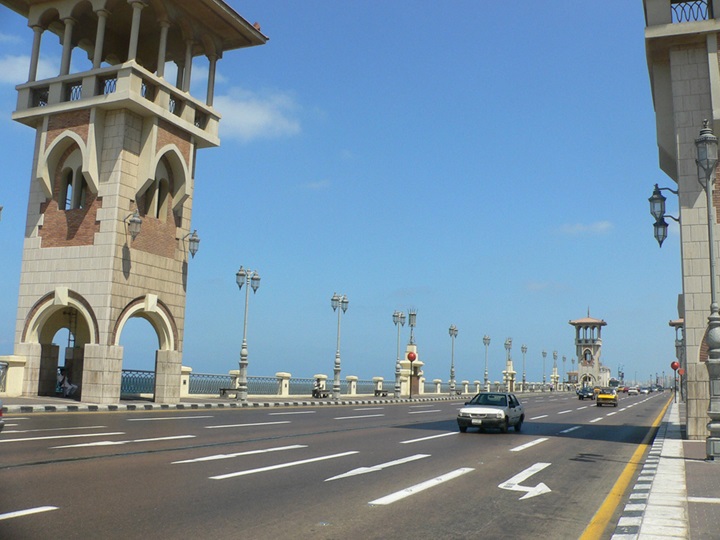
The bridge offers panoramic views of the Eastern Harbor and the surrounding cityscape, making it a popular spot for locals and tourists alike to enjoy the scenic beauty of Alexandria.
The bridge is named after the British explorer and journalist, Sir Henry Morton Stanley, who is famous for his exploration of Africa and his search for the source of the Nile River.
Serapeum of Alexandria
The Serapeum of Alexandria was an ancient temple dedicated to the worship of the Greco-Egyptian deity Serapis, who was created during the Ptolemaic period in Egypt. The Serapeum was located in the ancient city of Alexandria, Egypt, near the northeast corner of the city's main harbor, known as the Great Harbor.
The construction of the Serapeum is believed to have begun during the reign of Ptolemy III Euergetes in the 3rd century BCE. It was built on a grand scale and served as a center of religious and cultural activity in Alexandria.
Architecture: The Serapeum was an impressive architectural complex, featuring a main temple dedicated to Serapis, as well as smaller temples, courtyards, and surrounding buildings. The main temple was adorned with intricate carvings, statues, and ornate decorations.
Religious Significance: Serapis was a syncretic deity created by the Ptolemaic rulers to unite Greek and Egyptian religious traditions. As a result, the Serapeum became a symbol of religious syncretism and cultural fusion in Alexandria.
Library: The Serapeum was also home to a famous library known as the Serapeum Library, which housed a collection of scrolls and manuscripts. While not as renowned as the Library of Alexandria, the Serapeum Library was still a significant center of learning and scholarship in the ancient world.
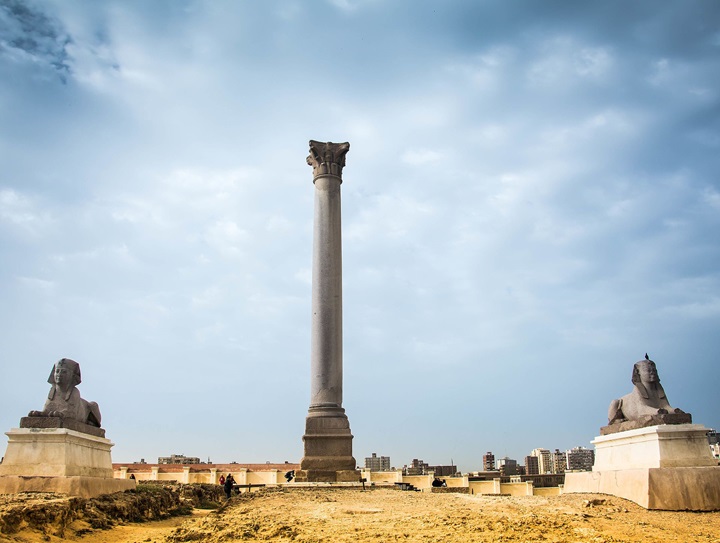
Destruction: The Serapeum suffered several attacks and destructions over the centuries. The most notable destruction occurred in 391 CE when the Christian Roman Emperor Theodosius I ordered the closure and destruction of pagan temples, including the Serapeum. The temple complex was razed to the ground, and its remnants were gradually buried over time.
Excavations: The remains of the Serapeum were discovered by archaeologists in the late 19th and early 20th centuries. Excavations have revealed fragments of statues, architectural elements, and inscriptions, providing valuable insights into the history and architecture of the ancient temple complex.
Today, while the Serapeum no longer stands in its original form, its ruins serve as a reminder of the rich cultural and religious heritage of ancient Alexandria.
Bibliotheca Alexandrina
The Bibliotheca Alexandrina is a modern library and cultural center located in Alexandria, Egypt, built near the site of the ancient Library of Alexandria.
The idea to revive the ancient Library of Alexandria was first proposed by Egyptian intellectuals and scholars in the late 1970s. Construction of the new library began in 1995, and the Bibliotheca Alexandrina was officially inaugurated on October 16, 2002.
The Bibliotheca Alexandrina was designed by a Norwegian architectural firm, Snøhetta, following an international design competition. The building's striking design incorporates modern architectural elements while paying homage to the ancient library's legacy. It features a cylindrical shape reminiscent of a sundial and is surrounded by a large circular wall engraved with characters from various world scripts.
The library houses a vast collection of books, manuscripts, and digital resources, covering a wide range of subjects including science, humanities, arts, and literature. It also includes specialized collections such as the Manuscript Museum, the Antiquities Museum, and the Alexandria and Mediterranean Research Center.
In addition to its library collections, the Bibliotheca Alexandrina serves as a vibrant cultural center, hosting exhibitions, lectures, conferences, and artistic performances. It is a hub for intellectual exchange and dialogue, bringing together scholars, artists, and thinkers from around the world.
The Bibliotheca Alexandrina is equipped with state-of-the-art technology and digital resources, including online databases, digital archives, and multimedia facilities. It provides access to information and educational resources to users both locally and globally.
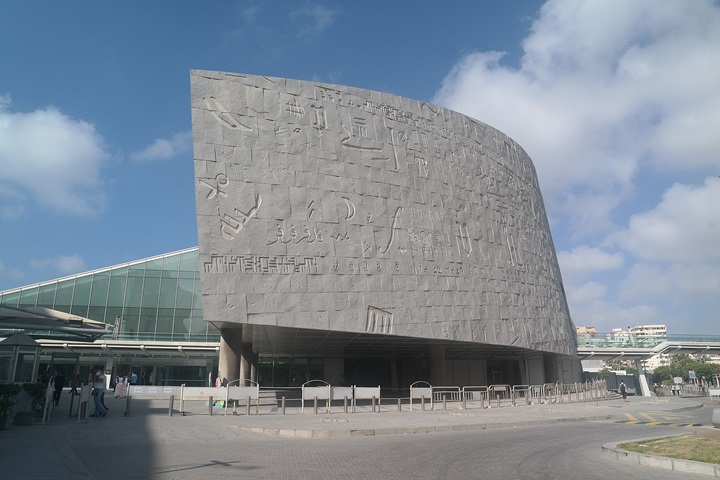
The library is actively involved in educational outreach programs aimed at promoting literacy, lifelong learning, and cultural enrichment. It offers a variety of educational activities and services for children, youth, and adults, including workshops, seminars, and language courses.
The Bibliotheca Alexandrina has become a symbol of Alexandria's cultural renaissance and its commitment to intellectual and cultural exchange. It honors the legacy of the ancient Library of Alexandria while embracing modern technology and innovation to serve the needs of contemporary society.
Overall, the Bibliotheca Alexandrina stands as a testament to the enduring importance of libraries as centers of knowledge, culture, and community engagement. It continues to inspire and enrich the lives of people in Alexandria and beyond.
Kom El Deka
Kom El Deka is an archaeological site . The name "Kom El Deka" translates to "Mound of Rubble" in Arabic, and it is a significant historical site that has revealed remains from various periods of Alexandria's history.
Kom El Deka is situated in the eastern part of Alexandria, near the ancient city center and close to the Alexandria National Museum.
The site of Kom El Deka has been inhabited since ancient times, and archaeological excavations have uncovered layers of occupation dating back to different periods, including the Graeco-Roman, Byzantine, and Islamic eras. One of the most prominent features of Kom El Deka is its Graeco-Roman ruins, which include a Roman amphitheater, a villa complex, and other structures. The Roman amphitheater is particularly noteworthy, as it is one of the few remaining Roman theaters in Egypt. The Roman amphitheater at Kom El Deka is believed to have been built during the 2nd century AD and could accommodate around 800 spectators. It was likely used for various performances and events, such as theatrical productions, gladiatorial contests, and public gatherings.
Excavations at Kom El Deka have also revealed the remains of a large villa complex, which may have served as a residential or administrative building during the Roman period. The villa features intricate mosaic floors, wall paintings, and other architectural elements.
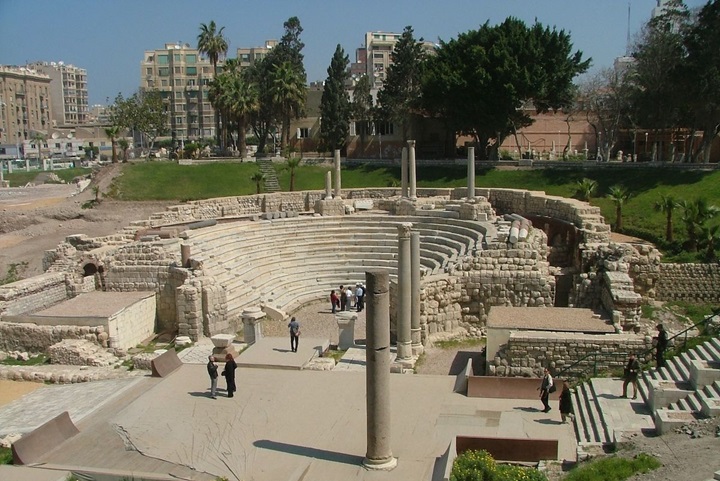
In addition to the Graeco-Roman remains, Kom El Deka has also yielded evidence of Byzantine and Islamic occupation. This includes traces of churches, houses, and other structures dating to these later periods.
Archaeological excavations at Kom El Deka have been ongoing since the late 20th century, uncovering new insights into the history and urban development of ancient Alexandria. Efforts are also underway to conserve and preserve the site's archaeological remains for future generations.
Kom El Deka is an important archaeological site that provides valuable clues about Alexandria's rich and diverse history, spanning multiple civilizations and periods of time. It offers visitors a glimpse into the ancient past of one of the greatest cities of the Mediterranean world.
Montaza Palace
Montaza Palace, also known as Al-Montaza Royal Palace, is a historic palace complex located in Montaza Park along the Mediterranean coast of Alexandria, Egypt.
Montaza Palace is situated in the eastern part of Alexandria, approximately 15 kilometers (9 miles) east of the city center, overlooking the Mediterranean Sea. The palace complex was originally built in 1892 as a hunting lodge for the Egyptian royal family during the reign of Khedive Abbas II. It was later expanded and renovated by King Fuad I and King Farouk I during the early 20th century, transforming it into a summer residence for the royal family.
Montaza Palace features a blend of architectural styles, including Ottoman, Florentine, and Moorish influences. The main palace building is characterized by its grandeur and opulence, with elegant façades, ornate domes, and intricate decorations. Surrounding the palace are lush gardens, palm trees, and manicured lawns, creating a picturesque setting overlooking the sea.
In addition to the main palace building, the Montaza Palace complex includes several other structures, such as guest villas, administrative buildings, and service quarters. There are also recreational facilities, including a beach, swimming pools, and gardens, making it a popular destination for leisure and relaxation.
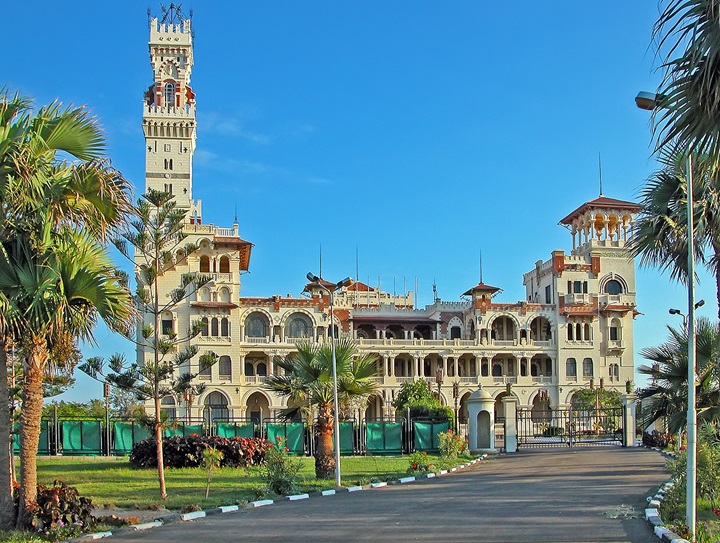
Montaza Palace served as a summer retreat for the Egyptian royal family, offering a luxurious and tranquil escape from the hustle and bustle of urban life in Alexandria. It was used for various royal ceremonies, gatherings, and diplomatic events, hosting dignitaries and heads of state from around the world.
Following the Egyptian Revolution of 1952 and the abolition of the monarchy, Montaza Palace was converted into a government-owned property and opened to the public as a public park. Today, visitors can explore the palace complex, stroll through the gardens, and enjoy the scenic views of the Mediterranean coastline.
Montaza Palace and its surrounding park are popular tourist attractions in Alexandria, offering visitors the opportunity to experience the grandeur of Egypt's royal heritage while enjoying the natural beauty of the Mediterranean landscape.


